Generation of Computer

Each generation of computer is characterized by a major technological development that fundamentally changed the way computers operate, resulting in increasingly smaller, cheaper, more powerful and more efficient and reliable devices.

The iPad is one of the hottest gadgets of 2010

The iPad essentially revolutionises the concept of a tablet computer. Previously tablet devices addressed a legitimate consumer need (casual, lazy, couch-bound computing), but left most people frustrated with a stylus-driven handwriting recognition system and an operating system that was really designed to be used on a desktop PC.

The Technology of Mobile Phone

Mobile phones also support a wide variety of other services such as text messaging, MMS, email, Internet access, short-range wireless communications (infrared, Bluetooth), business applications, gaming and photography. Mobile phones that offer these more general computing capabilities are referred to as smartphones.

The Technology of Internet

The Internet is a global system of interconnected computer networks that use the standard Internet Protocol Suite (TCP/IP) to serve billions of users worldwide.

The Categories of Software

Software is often divided into application software (programs that do work users are directly interested in) and system software.

Showing posts with label Generation of Computer. Show all posts

Fifth Generation of Computer (Present - Beyond)

The fifth generation computers are technologically advance and are still being development to become more efficient.

The inventions of new hardware technology in the fifth generation have grown rapidly including many other modern computer devices such as :

  • silicone chips
  • processor
  • robotics
  • virtual reality
  • intelligent systems
  • programs which translate languages


silicone chips


processor


robotics


virtual reality - Virtual helmet

intelligent system


software to translate language


Fourth Generation of Computer (1971 - Present)

It took only 55 years for the 4 generations to evolve. The growth of the computer industry developed technologies of computer inventions. There are many types of computer models such as:
  • Apple Macintosh
  • IBM
  • DELL
  • ACER

In 1971 Intel created the first microprocessor. In 1976, Steve Jobs built the first Apple computer. Then, in 1981, IBM introduced its first personal computer.

Steve Jobs


Bill Gates

Micheal Dell


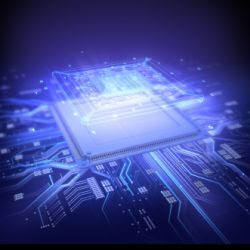
During the fourth generation, hardware technology such as silicone chips, microprocessor and storage devices were invented. A microprocessor is a specialized chip which is developed for computer memory and logic.


Microprocessor

silicone chips


The microprocessor is a large-scale integrated circuit which contained thousands of transistors. The transistors on this one chip are capable of performing all of the functions of a computer's central processing unit.


Advantages :

  • Computers became 100 times smaller than ENIAC (Electronic Numerical Integrator and Computer) the first computer
  • Gain in speed, reliability and storage capacity
  • Personal and software industry boomed

Third Generation of Computer (1964 - 1971)

1965 : BASIC (Beginners All-purpose Symbolic Instruction Code) programming language developped by Dr. Thomas Kurtz and Dr. John Kemeny.

1969 : The Internet is started. (See History of the Internet)

1970 : Dr. Ted Hoff developed the famous Intel 4004 microprocessor (G) chip.

1971 : Intel released the first microprocessor, a specialized integrated circuit which was ale to process four bits of data at a time. It also included its own arithmetic logic unit. PASCAL, a structured programming language, was developed by Niklaus Wirth.
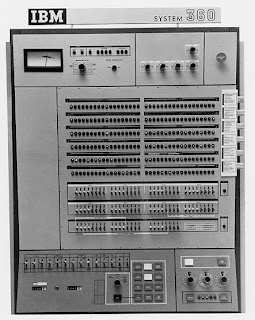

IBM 360 Series

In the third generation era, the IBM 370 series were introduced in 1964. It came in several models and sizes.It was used for business and scientific programs. Other computer models introduced were CDC 7600 and B2500.


The development of integrated circuit (IC), signal the beginning of the third generation computers. Silicone chips were manufactured in 1961 at the Silicone Valley. Then came the integrated circuit technology, which had reduced the size and cost of computers.


It is a complete electronic circuit on a small chip of silicone. Which is also known as semi conductor. Other than that, the Magnetic Core Memory was replaced by a device called the microchip. Also the first 256 bit RAM was introduced and it was the basis for development of 1K bit RAM.


Advantages :

A new concept in this generation was that of a family of computer which allowed computer to be upgraded and expanded as necessary.


· Silicone chips were reliable, compact and cheaper.

· Sold hardware and software separately which created the software industry.

· customer service industry flourished (reservation and credit checks)


Second Generation of Computer (1959 - 1964)

1960s : Gene Amdahl designed the IBM System/360 series of mainframe (G) computers, the first general-purpose digital computers to use intergrated circuits.

1961: Dr. Hopper was instrumental in developing the COBOL (Common Business Oriented Language) programming language.

1963 : Ken Olsen, founder of DEC, produced the PDP-I, the first minicomputer (G).


The famous computer scientists during the second generation era were:


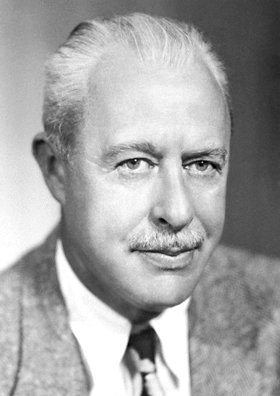
John Bardeen


Walter Houser Brattain


William Shockly


1. The creation of transistor spark the production of a wave of second generation computer.
2. Transistor was small devices use to transfer electronic
signals across a resister.
3. Transistors had many advantages compared to
other hardware technology.


Transistor ;


• transistors were smaller than vacuum tubes
• they needed no warm up time
• consumed less energy
• generated much less heat
• faster and more reliable


First Generation of Computer (1940 - 1959)

The first generation of computer were huge, slow, expensive and often unreliable. In 1946, two Americans, Presper Eckert and Willian Mauchly build the ENIAC (Electronic Numerical Integrator and Computer). It use vacuum tube instead of mechanical switches of the MARK 1.

Presper Eckert and Willian Mauchly and Vacuum Tube

ENIAC


In 1951, Eckert and Mauchly build the UNIVAC, which could calculate at the rate of 10,000 addition per seconds.


UNIVAC


MARK 1


Hardware Technology :


New invention of hardware were needed with the new computer technology.

VACUUM TUBE


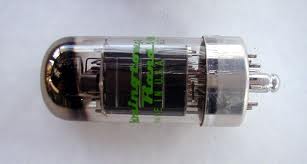
The vacuum tube was an extremely important step of the advancement of computers.In a computer, a vacuum tube which is an electronic tube about the size of light bulbs, was used as the internal computer components. Thousands of them were used.

PUNCHED CARD

Punched card was used to store data.

MAGNETIC TAPE


Magnetic tape was introduced in 1957. It was a faster and a more compact method of storing data. Using magnetic tape became more reliable and cost-effective


Problems :

  • the vacuum tubes generated a great deal of heat causing many problems in temperature regulation and climate control
  • the tubes also burnt out frequently
  • people operating the computer did not know that the problem was in the programming machine
  • the second generation computer scientists invented something new due to lots of problem created by vacuum tubes

Related Posts Plugin for WordPress, Blogger...